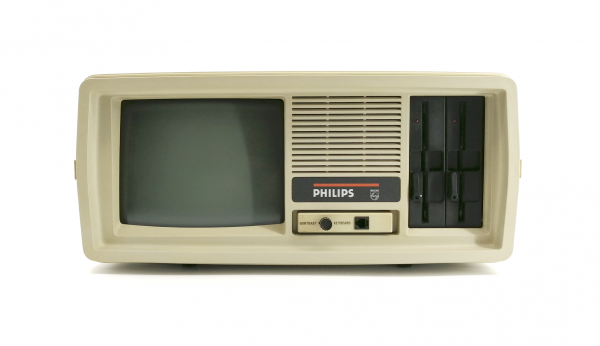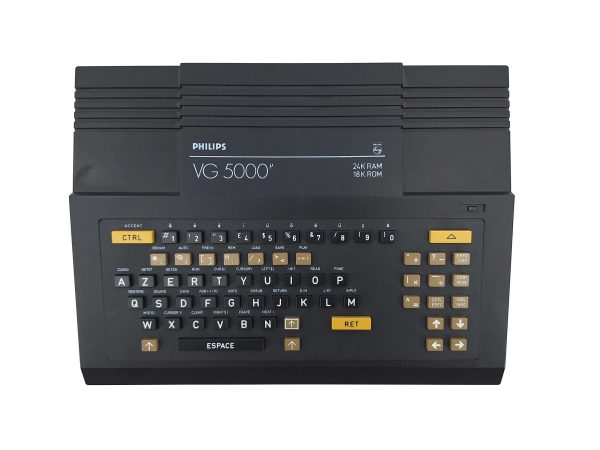
Philips P3100
The Philips P3100 is the first IBM PC-compatible computer from Philips. The machine combines an 8088 processor, MS-DOS compatibility, expandability, and a striking high-resolution monochrome graphics display. With this system, Philips clearly targeted businesses, administrative offices, government organizations, and professional users who required both word processing and graphical applications.
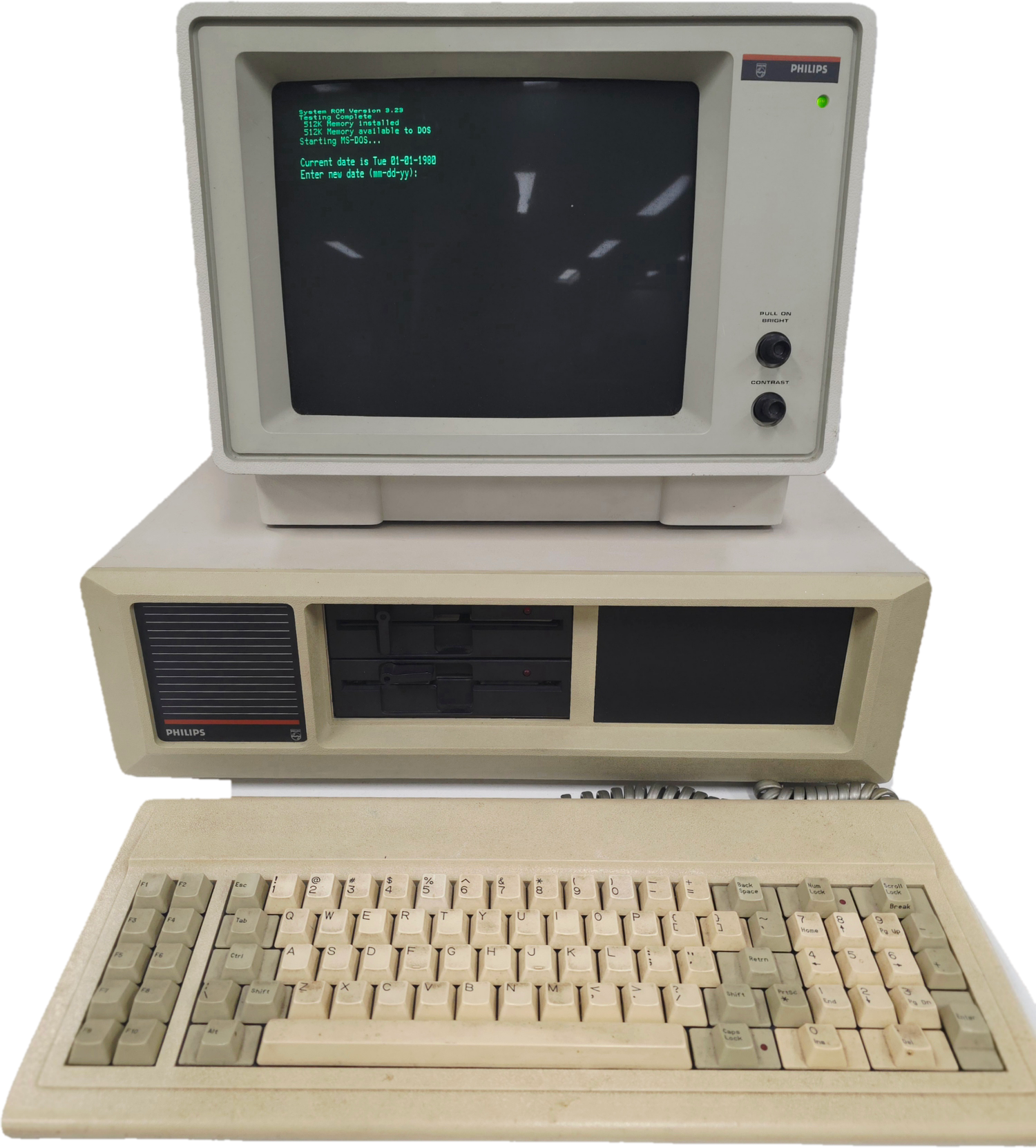
Philips P3100
The Philips P3100 is the first IBM PC-compatible computer from Philips. The machine combines an 8088 processor, MS-DOS compatibility, expandability, and a striking high-resolution monochrome graphics display. With this system, Philips clearly targeted businesses, administrative offices, government organizations, and professional users who required both word processing and graphical applications.
The machine is intended for word processing, spreadsheets, administrative tasks, technical applications, and more advanced graphical output. The system comes standard with MS-DOS, GW-BASIC, and the self-study package PC-Tutor, making it suitable for both professional and educational use.
The P3100 was compared to the IBM PC and XT and was intended to be a competitive alternative, often offering more standard equipment at a lower price (such as a monitor and expansion cards that IBM charged extra for).
The distinguishing features of the P3100 compared to the standard IBM PC include the 12-inch green monitor, which offers a resolution of 640×325 pixels—significantly higher than many competitors of the time. The display supports both text and graphics modes, with adjustable brightness. According to internal Philips documentation, the P3100 includes several functions as standard on the motherboard that, in many other PCs, required additional expansion cards:
- serial interface (V.24/RS-232C)
- parallel interface
- expansion slots
- support for one or two floppy drives and/or a hard disk (10 MB)
Although Philips positioned the machine strongly, several clear disadvantages emerge. Philips itself states that the hard-disk controller is incompatible with that of the IBM PC/XT, which prevents PC-DOS 2.0 from working with the P3100’s hard disk. Software that uses IBM PC BIOS routines may also encounter problems.
Although Philips offered strong graphical capabilities, the business market in 1984 was rapidly moving toward IBM-compatible PCs without hardware deviations. The P3100 falls into the category of systems that are technically solid but do not fully fit into the fast-growing IBM software ecosystem.
Museum Collection
Documents
Philips P3100 Flyer
P3100 system review
P3100 verkoop informatie
P3100 schematics
P3100 Technical reference manual